
Case Study: Differential Foundation Settlement & Tidal Hydrostatic Water Ingress at 50–52 Ferry Street, E14
Executive Summary
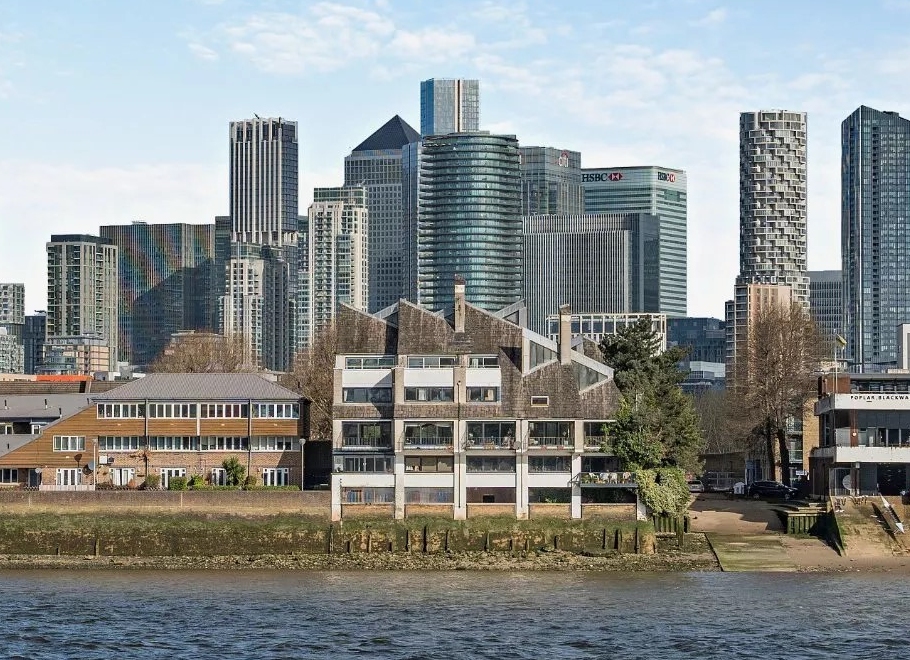
- Property Address: 50–52 Ferry Street, London E14
- Building Typology: Grade II listed 4-storey riverside post-modernist residential property designed by Stout & Litchfield, c. 1979
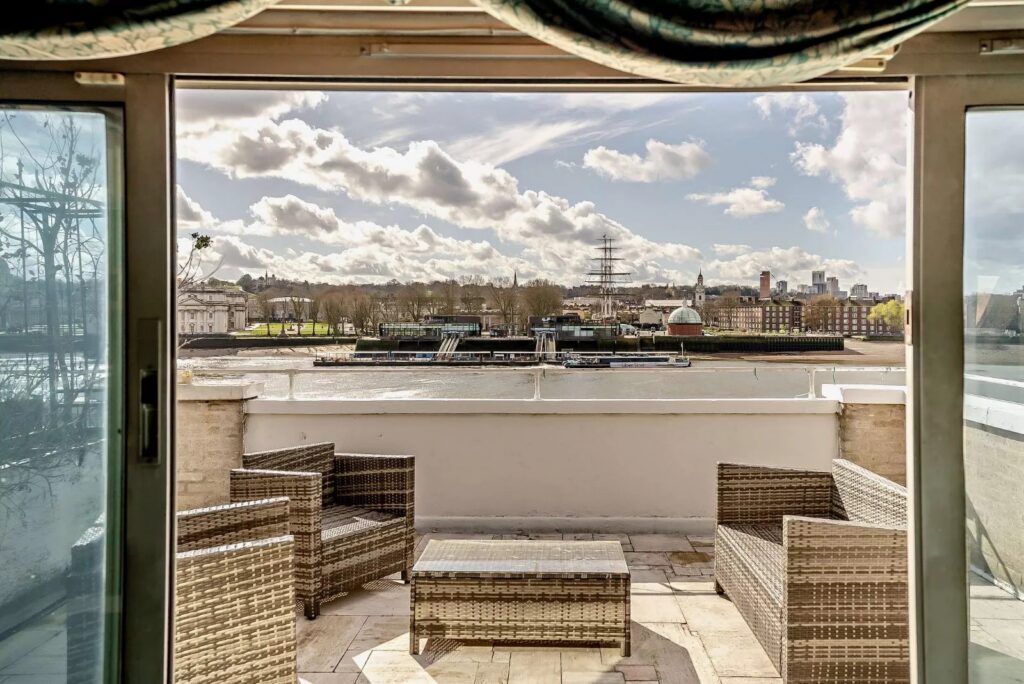
- Location & Setting: Tidal Thames riverside frontage directly opposite the Cutty Sark
- Primary Assessment: Differential movement between deep river piling and shallow hinterland footings, complicated by low-level water ingress.
Structural Context & Foundations
The property sits on a tidal riverside boundary with a hybrid foundation system:
- Riverside Elevation: Founded on rigid deep river piles driven into Thames Gravels / London Clay to resist riverbank shear.
- Main Structure: Supported on conventional shallow footings set within soft alluvial upper strata.
Diagnostic Observations & Pathology
1. High-Level Cracking
- Mechanism: Settlement of shallow rear footings relative to the unyielding riverside piles.
- Manifestation: Diagonal shear cracking at upper floor levels near the interface between the front bay and main core.
- Analysis: Stiff river piles experience negligible vertical displacement, while rear footings settled under variable ground conditions. This differential movement induces shear stress across upper masonry junctions.
2. Basement-Level Cracking & Water Ingress
- Mechanism: Tidal hydrostatic pressure combined with localized low-level differential shear.
- Manifestation: Fracturing through lower walls, accompanied by active water seepage.
- Analysis: Differential movement disrupted low-level tanking membranes and mortar joints. Tidal hydrostatic heads then force river water through these fractures during high tide cycles.
Diagnostic Conclusions & Recommendations
High Level: Helical stainless steel stitch bars across fracture lines, paired with flexible lime pointing.
Root Cause: Structural distress stems from the foundation transition across the site geology.
Structural Adequacy: Movement is historic and stabilized, but active water ingress will cause ongoing fabric deterioration if left unaddressed.
Remedial Strategy:
Low Level: Injection resin grouting or Type C cavity drain membrane installation to control tidal ingress.